
GoHighLevel vs Salesforce: Which CRM Is Best for All Businesses?
Choosing between GoHighLevel vs Salesforce depends entirely on your business model and technical resources. If you are a marketing agency or small business needing an all-in-one platform for automation, funnels, and client management, GoHighLevel is likely the better choice due to its flat-rate pricing and ease of use.
However, if you are a large enterprise requiring deep customization, complex data reporting, and have a dedicated developer team, Salesforce remains the industry standard.
Read on to discover the specific features, hidden costs, and operational differences that will help you make the right decision for your growth.
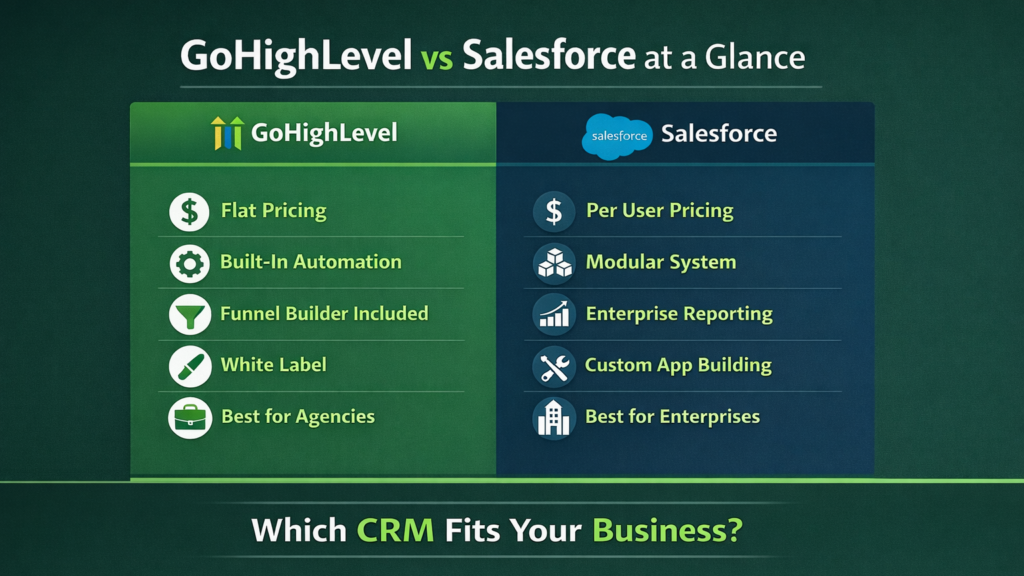
GoHighLevel vs Salesforce at a Glance
Platform Overview: GoHighLevel vs Salesforce
Before diving into the numbers, it is important to understand the core philosophy behind each platform. They both manage customer relationships, but they approach the task from very different angles.
What Is GoHighLevel?
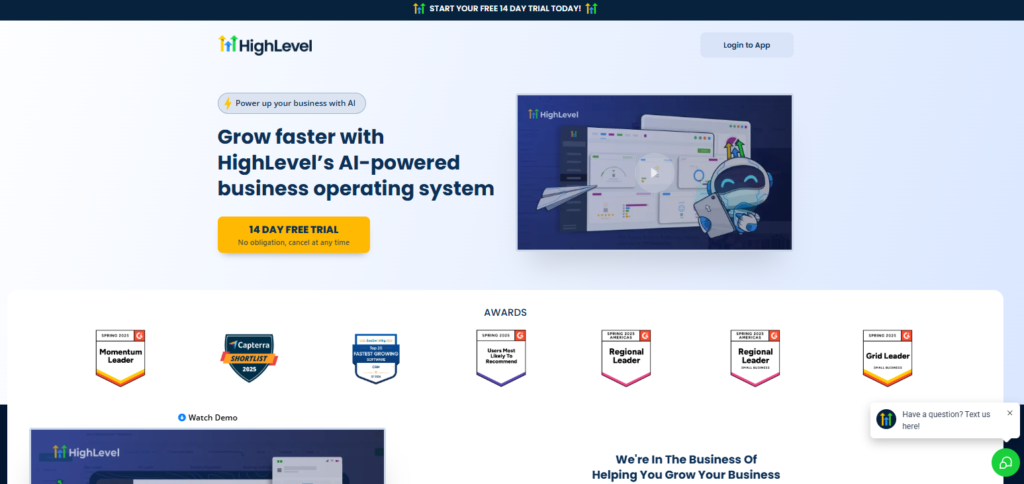
GoHighLevel, often just called HighLevel, is a platform built specifically for marketing agencies and small business owners. It combines a CRM with a full suite of marketing tools.
Instead of paying for separate software to handle email marketing, text messaging, funnel building, and appointment scheduling, GoHighLevel puts it all in one place. Its goal is to simplify the tech stack. It allows users to automate lead follow-ups and client onboarding without needing complex code.
For agencies, it offers a unique “SaaS Mode” that lets them resell the software to their own clients under their own brand.
What Is Salesforce?
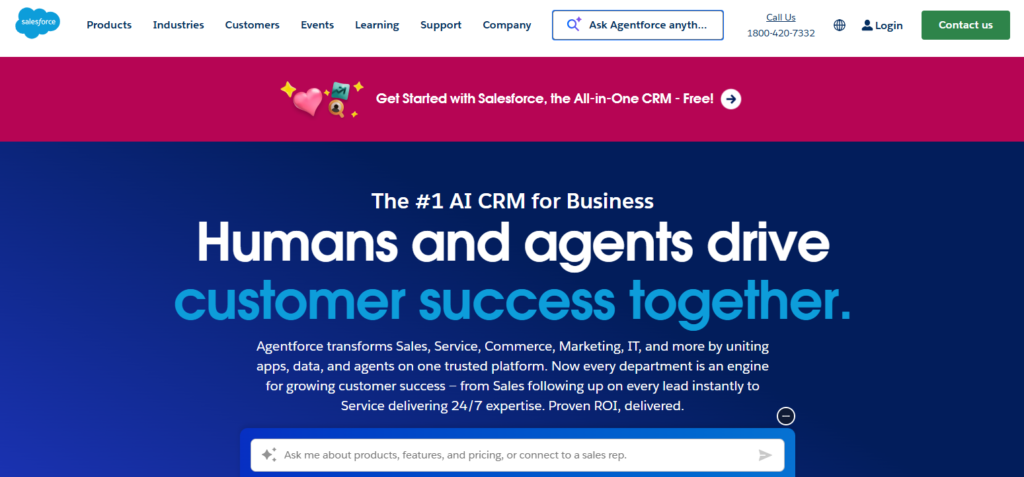
Salesforce is the giant of the CRM world. It is a cloud-based software designed to handle every aspect of the customer lifecycle, from sales and service to marketing and analytics.
It is highly modular, meaning you buy the base “Sales Cloud” and then add other “Clouds” or third-party apps as you need them. It is built for scalability.
A global corporation with thousands of employees can use Salesforce to manage complex territories, forecast revenue with AI, and integrate with legacy enterprise systems. It is powerful, but that power often comes with high complexity and higher costs.
Salesforce excels at managing contacts, accounts, opportunities, and analytics. However, it often requires multiple add ons, third party tools, and consultants to build full marketing and automation workflows.
What Businesses Really Mean When They Compare CRMs
When people search for gohighlevel vs salesforcel, they are not just comparing software names. They are comparing two very different ways of running a business.
Most businesses want a CRM to do four things well.
• Capture leads without friction
• Follow up automatically so no opportunity is lost
• Help teams close deals faster
• Retain customers with consistent communication
The problem is that not all CRMs are built with the same philosophy. Some are designed as data systems first. Others are designed as automation engines with CRM features built in.
Understanding this mindset difference is essential before you look at features or pricing.
Detailed Features Comparison: GoHighLevel vs Salesforce
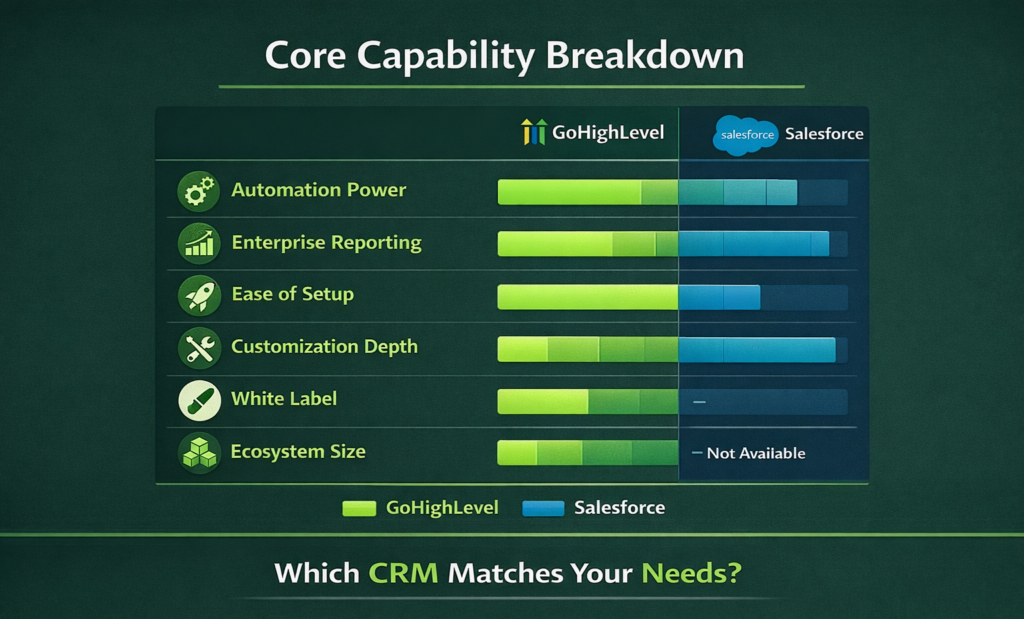
When comparing gohighlevel vs salesforce, the feature sets reveal where each platform shines. GoHighLevel aims for breadth, giving you many tools out of the box. Salesforce aims for depth, offering highly specialized tools that often require additional configuration.
| Feature Category | GoHighLevel Capabilities | Salesforce (Sales Cloud) Capabilities |
| CRM & Pipeline | Visual drag-and-drop pipelines, unlimited contacts, smart lists, and tag-based management. Very intuitive for sales teams. | Advanced opportunity management, deep forecasting, territory management, and granular permission controls. |
| Marketing Automation | Native email marketing, SMS marketing, ringless voicemail, and “snapshot” workflow templates. No external integrations needed. | Requires integration with Marketing Cloud or Pardot (additional cost) for comparable email/SMS features. |
| Funnel Builder | Built-in drag-and-drop builder for landing pages, forms, surveys, and complete sales funnels. Replaces ClickFunnels. | Not included natively. Requires third-party integrations or separate Salesforce modules to build landing pages. |
| Communication | 2-way text messaging, email, phone dialer, and Facebook/Instagram DM integration in one unified inbox. | Email integration is standard. SMS and social messaging usually require paid add-ons or third-party apps like Twilio. |
| Appointment Booking | Native calendar system similar to Calendly, with automated reminders and team scheduling. | Basic event tracking included. Advanced scheduling often requires Salesforce Scheduler or external tools. |
| Customization | Custom fields and values are easy to add. API access available for developers. “Snapshots” allow copying setups. | Infinite customization with Apex code and Visualforce. Can build entirely custom apps on the platform. |
| User Interface | Modern, intuitive interface designed for marketers. Easier learning curve. | Dense, data-heavy interface. High learning curve often requiring certified administrators. |
| White Labeling | Full white-label capability. Agencies can rebrand the platform as their own product. | Not available. You cannot rebrand the Salesforce interface as your own software. |
| Mobile App | Fully functional mobile app for leads and conversations (Lead Connector). Can be white-labeled. | robust Salesforce mobile app for data entry and reporting. Cannot be white-labeled. |
| Memberships | Built-in course hosting and membership site builder. | Not native. Requires external Learning Management System (LMS) integrations. |
This feature comparison highlights why gohighlevel vs salesforcel is not a simple checklist decision. It depends on how much complexity your business can handle.
Deep Dive: Key Functional Differences
To truly understand which platform suits you, we must look beyond the feature lists. The daily experience of using these tools is quite different.
Ease of Use and Setup
GoHighLevel is designed to be “plug and play” for marketers. You can sign up and have a working sales funnel and automated email sequence running within a few hours. The terminology is friendly to digital marketing, using words like “funnels,” “triggers,” and “campaigns.”
Salesforce is a database first. Setting it up correctly often requires a certified Salesforce Administrator or an external consultant. It is not something you simply turn on and start using for complex tasks immediately. You have to build your processes into it.
This flexibility is great for unique enterprise workflows but can be a hurdle for a small business that just wants to sell products.
Automation Capabilities
When discussing gohighlevel vs salesforce regarding automation, the scope matters.
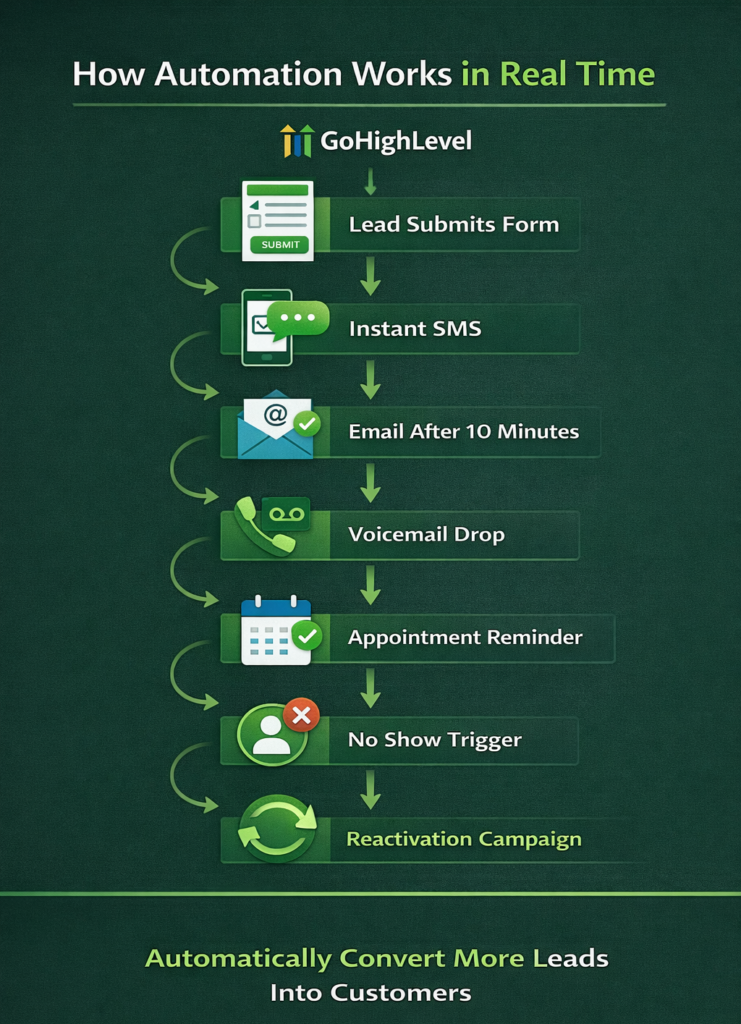
GoHighLevel excels at communication automation. If a lead fills out a form, GHL can instantly send an SMS, wait an hour, send an email, and then leave a voicemail drop. This is native functionality.
Salesforce handles data automation exceptionally well. If a deal moves from “Negotiation” to “Closed Won,” it can trigger complex internal record updates, notify finance departments, and generate contracts. However, sending that simple SMS follow-up usually requires integrating a third-party tool like Twilio or purchasing a marketing add-on, which adds to the monthly bill.
At NEXGHL, we specialize in helping businesses configure these automations in GoHighLevel to ensure no lead is ever left behind. If you are struggling to build efficient workflows, checking out ourautomation services could save you hours of manual work.
Integrations and Ecosystem
Salesforce wins on pure volume of integrations. The Salesforce AppExchange is a massive marketplace with thousands of apps. Virtually every business software on the planet integrates with Salesforce. If you use a very obscure or highly specific Enterprise ERP system, Salesforce will likely connect to it.
GoHighLevel has a smaller ecosystem but covers the essentials that 95% of businesses need (Google Sheets, Stripe, Zoom, Facebook Ads). For anything else, it relies heavily on Zapier or Make (formerly Integromat) webhooks. While this works well, it is not as seamless as the native integrations found in the Salesforce ecosystem.
Reporting and Analytics
Salesforce is the undisputed king of reporting. Its ability to slice and dice data is unparalleled. You can create complex dashboards that track revenue against projections, territory performance, and minute details of sales activities.
GoHighLevel provides essential reporting. You can see how many leads came in, how many appointments were booked, and the conversion rates of your funnels. For most small to medium businesses, this is sufficient. However, it lacks the deep, granular data visualization capabilities that a Fortune 500 CFO might require from Salesforce.
Automation Capabilities Compared in Real Business Scenarios
Automation is where GoHighLevel clearly separates itself.
With GoHighLevel, you can automate.
• Missed call text back
• Lead nurture sequences
• Appointment reminders
• Follow ups after no shows
• Long term reactivation campaigns
These automations are visual, easy to edit, and quick to deploy.
Salesforce can automate many of these actions, but usually through workflows, process builders, or external tools. This adds cost, setup time, and maintenance complexity.
In the gohighlevel vs salesforcel discussion, automation maturity often determines which platform delivers ROI faster.
Scalability and Growth Considerations
Salesforce shines in enterprise environments where.
• Hundreds of users need role based access
• Complex approval flows exist
• Deep analytics drive decisions
GoHighLevel scales differently.
• Agencies manage multiple client accounts
• Service businesses automate customer journeys
• Growth teams iterate fast without developer support
This is why gohighlevel vs salesforcel depends heavily on your growth model.
Security and Reliability
Salesforce has enterprise grade security, compliance certifications, and data governance features. This is critical for regulated industries.
GoHighLevel provides solid security suitable for most businesses, agencies, and service providers. For companies not bound by strict compliance frameworks, this level is adequate.
Use Case Breakdown by Business Type
Small Businesses and Startups
GoHighLevel is usually the better fit. Lower cost, faster setup, and built in automation reduce overhead.
Agencies and Consultants
GoHighLevel is designed for this model. Multi account management and white labeling are major advantages.
Mid Sized Service Businesses
GoHighLevel works well when automation and customer communication are priorities.
Large Enterprises
Salesforce is often preferred due to reporting depth, compliance, and customization.
Understanding these use cases helps clarify the gohighlevel vs salesforcel decision beyond marketing claims.
Detailed Pricing and Plans Comparison
Pricing is often the most significant factor when deciding between gohighlevel vs salesforce.
Salesforce uses a per user model which means your costs grow every time you hire a new team member.
GoHighLevel uses a flat monthly fee that allows for unlimited users, making it incredibly attractive for growing teams.
GoHighLevel Pricing Structure
| Plan Name | Price per Month | Target Audience | Key Inclusions |
| Starter Plan | $97 | Solopreneurs and Small Teams | 3 Sub-accounts, all core features, CRM, and funnels. |
| Agency Unlimited | $297 | Growing Agencies | Unlimited sub-accounts, unlimited users, and API access. |
| Pro / SaaS Mode | $497 | SaaS Entrepreneurs | White label desktop app, automated sub-account rebilling, and AI tools. |
Important notes about GoHighLevel pricing.
• No per user fees
• Automation included in all plans
• Funnels, email, SMS, and CRM included natively
Note: GoHighLevel also offers a 14-day free trial. Additional costs may apply for usage of email and SMS credits (Twilio/Mailgun backend), but these are pay-as-you-go.
Salesforce Sales Cloud Pricing Structure
| Plan Name | Price per User/Month | Target Audience | Key Inclusions |
| Starter Suite | $25 | Very Small Businesses | Basic lead and account management with limited automation. |
| Professional | $100 | Mid-sized Teams | Full CRM features and pipeline forecasting for sales teams. |
| Enterprise | $165 | Large Organizations | Complex workflow automation and custom API integrations. |
| Unlimited | $330 | Global Enterprises | 24/7 support, full AI capabilities, and unlimited custom apps. |
| Einstein 1 Sales | $500 | AI-First Corporations | Integrated Data Cloud and advanced generative AI agents. |
Important notes about Salesforce pricing.
• Charges per user
• Marketing automation often requires additional products
• Setup and customization costs are not included
When businesses compare gohighlevel vs salesforcel, pricing alone often becomes a deciding factor, especially for small to mid sized teams.
Note: Salesforce pricing is typically billed annually. Additionally, many features like SMS or advanced marketing automation require separate “Clouds” or third party integrations that carry their own costs.
Hidden Costs to Consider
When evaluating gohighlevel vs salesforce, the sticker price is rarely the final price.
GoHighLevel Hidden Costs:
- Usage Costs: GHL relies on Twilio and Mailgun for the backend of texting and emailing. You pay for what you use (e.g., $0.0079 per text). However, on the Pro plan, you can rebill this to clients and actually make a profit.
- Setup Time: While easier than Salesforce, learning to build complex automations still takes time or requires hiring an expert.
Salesforce Hidden Costs:
- Implementation Fees: Implementing Salesforce is rarely free. Agencies often charge $5,000 to $50,000 just to set it up for your specific needs.
- Add-Ons: Do you want to send mass emails? You likely need Marketing Cloud or Pardot. Do you need a dialer? That is an extra app. The “base” price is just the entry fee.
- Administrator Salary: For the Enterprise plan, you will almost certainly need to hire a full-time Salesforce Administrator, whose salary will be a significant operational cost.
Total Cost of Ownership Comparison
When comparing CRMs, subscription price is only part of the cost.
GoHighLevel total cost includes.
• Subscription
• Messaging usage
• Optional expert setup
Salesforce total cost often includes.
• Per user licenses
• Marketing automation add ons
• Consulting and admin costs
Over time, GoHighLevel usually delivers lower total ownership cost for non enterprise businesses.
Real World Decision Framework
Ask yourself these questions.
• Do you need automation more than analytics?
• Do you want speed or customization depth?
• Is your team technical or operational?
• Do you manage multiple brands or clients?
Your answers will point clearly toward one platform.
If you want to understand how automation changes CRM outcomes in real businesses, explore our detailed breakdown of GoHighLevel automation workflows at gohighlevel automation services. It explains how businesses reduce manual work and increase conversions through smart system design.
Why GoHighLevel Is the Choice for Agencies and SMBs
If you are running an agency or a service based business, the gohighlevel vs salesforce comparison often ends in favor of GoHighLevel. The reason is the “Snapshot” system. A snapshot allows you to bundle an entire business setup—including funnels, automations, and pipelines—and deploy it into a new client account with one click. This level of scalability is something Salesforce simply does not offer for small business service providers.
Furthermore, the integration of 2-way SMS and phone systems directly within the GoHighLevel dashboard removes the need for expensive middleman software. You can manage Facebook DMs, Instagram messages, Google Business chats, and emails all from one unified inbox.
For a detailed look at how these automations can be tailored to your specific industry, you can visit our specialized expert insights at NEXGHL to see how we bridge the gap between technology and results.
Who Should Choose Which CRM?
Making the final call requires looking at your business size and goals.
Why Choose GoHighLevel?
You should choose GoHighLevel if you are a marketing agency, a local small business (like a gym, dentist, or contractor), or an online course creator.
The ability to replace five or six different software subscriptions (email, SMS, funnels, calendar, membership site) with one $97 or $297 monthly fee is a massive cost saver.
If your primary goal is lead generation and nurturing leads into customers through automated messages, GoHighLevel is the superior tool.
Why Choose Salesforce?
You should choose Salesforce if you are a mid-market to enterprise company with a large sales team.
If you have complex compliance requirements, need to manage intricate sales territories, or require deep analytics that cross-reference multiple data points, Salesforce is necessary. It is also the right choice if you have the budget to hire a dedicated administrator to manage the system.
For pure sales management where marketing is handled by a completely different department using different tools, Salesforce offers the robustness required.
Final Verdict: Which One Should You Choose?
The battle of gohighlevel vs salesforce is not really a battle of equals, but a comparison of tools for different jobs.
- Choose GoHighLevel if you are a marketing agency, a small to mid sized business, or an entrepreneur who wants to consolidate tools and reduce monthly overhead.
- Choose Salesforce if you are a large corporation with complex data needs, a massive sales team, and the budget to support a dedicated technical staff.
The goal of any CRM should be to simplify your life and increase your revenue. For most modern businesses looking for speed and automation, GoHighLevel offers a more versatile and cost effective path forward.
Ready to Build a CRM That Actually Drives Revenue?
Reading comparisons is useful. But results come from implementation. Most businesses do not fail because of the CRM they choose.
They fail because automation is never configured properly.
Whether you are migrating from Salesforce or setting up GoHighLevel for the first time, we can build the system correctly from day one.
Book a free strategy call and get a personalized automation roadmap for your business.
=> No generic advice.
=> No bloated tech stack.
> Just a revenue focused CRM system built properly <
